

A wide and diverse range of people attend our classes, from complete beginners all the way through to our assistant instructors. As you can see from the profiles below, we have many different reasons and motivations to practice Hung Ga Kung Fu! Do any of these resonate with you? If so, there’s a good chance you’re going to enjoy practicing with us – we look forward to seeing you in class!
Age: Under 20 | 20s | 30s | 40s | 50s | 60s
Occupation: Office Worker
Started: 2008
Why did you take up Kung Fu?
My friend and flatmate started attending Kung Fu and was very enthusiastic about the classes. She persuaded me to come along. It was inspiring to see the more advanced students train, and while our legs were shaking in horse stance we wondered if we’d ever reach their level. My friend moved away a few years later but by then, Kung Fu was an important part of my life, and my training partners were like family.
Which classes do you like best and how often do you attend?
I generally attend all the adult classes during the week and teach the kids classes on Saturdays. I couldn’t pick a favourite class, there is so much to gain and enjoy from all of them!
What motivates you to keep coming back?
Classes are always fun and interesting, and I always feel like I gain something from attending. If I’ve had a particularly long or tiring day sometimes I might feel like I don’t want to train in the evening, but I do, and I always feel better for it! The sense of camaraderie and community in every class is also a great mood-booster.
What’s your favourite aspect of Kung Fu so far?
My favourite aspect is that no matter how long you have trained, there is always progress to be made – it’s a lifelong pursuit. I love that you can train without equipment, and you can do it just about anywhere. I also love training with other people who share common goals and support each other.
Kung Fu has also given me so many opportunities – meeting great people, trips to China, teaching, performing and competing. Without Kung Fu I think my life would be very different – and much less fun!
Age: Under 20 | 20s | 30s | 40s | 50s | 60s
Occupation: Civil Servant
Started: 2011
Why did you take up Kung Fu?
A friend brought me along as he thought it looked like a good group of people to train with.
Which classes do you like best and how often do you attend?
At the moment my favourite classes are the ones on a Wednesday for sparring, pads, and conditioning. It’s nice to get a chance to practice applying what’s done in the forms while under the pressure of somebody not co-operating.
What motivates you to keep coming back?
The school is a great community that now just feels like home. Classes are fun & you get to work hard at the same time as learning some pretty interesting stuff.
What’s your favourite aspect of Kung Fu so far?
I like that there’s always something new to learn, or something old to understand better and improve on.
Age: Under 20 | 20s | 30s | 40s | 50s | 60s
Occupation: R&D Scientist
Started: 2011
Why did you take up Kung Fu?
I was young and keen on martial arts. Karate, Judo, and BJJ had not scratched my itch so I decided to try Yee’s Hung Ga. I was immediately captured by the style, the movements, and the community of students.
Which classes do you like best and how often do you attend?
All of them! Though Fridays are my favourite as they let me either drill deeper into my understanding of form application directly or teach younger students what I know. I try to attend two to three times a week, depending on my availability in the evenings.
What motivates you to keep coming back?
It’s a system that is impossible to complete, there is always something new to learn or study or improve. Alongside that, Sifu has built a very strong community in which everyone works to build everyone else up.
What’s your favourite aspect of Kung Fu so far?
Very hard to pick just one, but I like the completeness of our system. We develop ourselves physically, philosophically, and spiritually as part of our training. By learning what can be traced back to the Shaolin temples we hone ourselves in pretty much every aspect of life, which has immense value at all levels of training.
Age: Under 20 | 20s | 30s | 40s | 50s | 60s
Occupation: Teacher
Started: 2013
Why did you take up Kung Fu?
I made friends with a guy at work who was already a part of the Kung Fu school, and very evangelical about it, and who got me to give it a try. It’s over a decade later, so it must have worked!
Which classes do you like best and how often do you attend?
I try to attend as many classes as I can, ideally 3 times per week. I like all the classes for different reasons, but I would say Wednesdays with sparring and circuits training is the most challenging fun, while practicing form and teaching beginners on Monday is the most rewarding. It is great to review the things I already know and interrogate the reasons behind doing things the particular way we do things in order to understand them enough to teach them. Seeing students start to understand and pick up on elements they previously found tricky, and seeing them become more and more passionate and eager as they progress in their learning journey is fantastically rewarding.
What motivates you to keep coming back?
I love lifelong learning, and seeing how much more physically capable I have become, how my attitudes toward life and health and embracing challenges and being a part of a community have changed over the last 12 years, and how competence and resilience has grown day by day rather than in leaps and bounds. Kung Fu roughly means “strength acquired through time and effort”, and that is the attitude to approach it with. So I keep coming back out of a deep habit, but it is a very good habit and one that was well worth forming!
What’s your favourite aspect of Kung Fu so far?
I met my wife here, does that count? Even beyond that, being a part of this community and being on this journey with so many wonderful people I am lucky to call my friends now has been utterly life changing.
Age: Under 20 | 20s | 30s | 40s | 50s | 60s
Occupation: Fintech Data Scientist
Started: May 2017
Why did you take up Kung Fu?
My son & daughter started classes at the school before I did and it was whilst talking to the amazing instructors during those Saturday morning Kung Fu sessions for kids, that I was often encouraged to come along to an adult class. I initially demurred at this proposal as I felt too old to begin learning a martial art for the first time in my life.
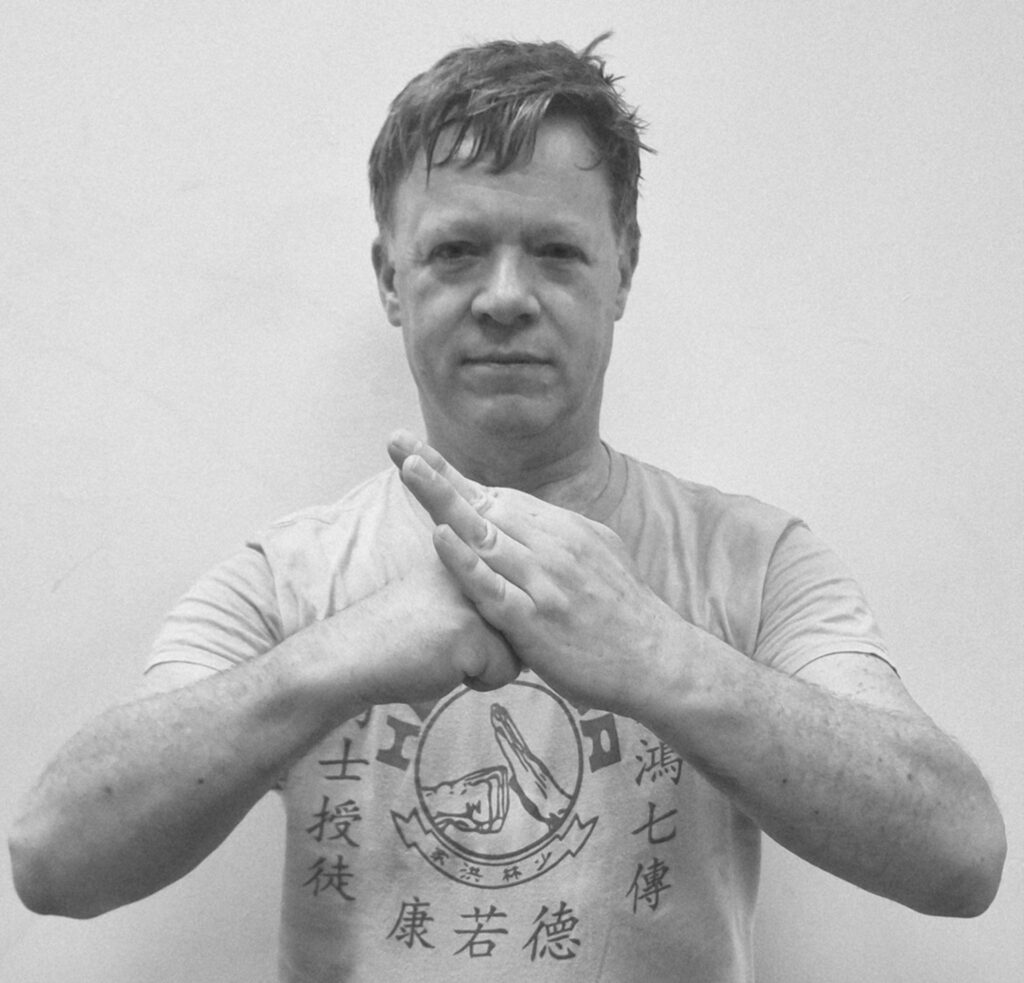
However, I soon noticed the positive effect Kung Fu was having on my children’s fitness and their confidence too. I subsequently realised that these would be useful traits to develop even, or perhaps especially, in middle-age and decided to give it ago: one of the best decisions I’ve made.
Which classes do you like best and how often do you attend?
I attend all three classes each week if possible: on Monday we learn form, a series of movements which build up into a ‘dictionary of fighting techniques’,on Friday the focus is on practical application of those techniques and Wednesday is sparring. Since the classes are complementary, it’s hard to name a clear favourite but I’ll go for the Wednesday class.In addition to both hand-to-hand and weapon sparring, it features a circuits session whose format is different every week; it’s immensely enjoyable and guarantees a slight sensation of muscle ache on the Thursday!
What motivates you to keep coming back?
Aside from personal goals such as improving skills, deepening knowledge & maintaining fitness, a big part of what keeps me coming back is thanks to the people I train with; they’re a friendly, supportive bunch. This makes for a real sense of community and a positive learning environment in our school.
What’s your favourite aspect of Kung Fu so far?
Kung Fu has given me a wide variety of unforgettable experiences which have enriched my life. For example, there’s a realisation that what we’re learning has been passed down from our ancestors over generations: I feel privileged to receive this deep knowledge with its remarkable insight into optimising body movement for self-defence. Also, completing each form, working to improve it&then testing gives rise to a sense of achievement I hadn’t felt for a long time. Finally, participation in cultural events as a member of the school Dragon Dance team has also been memorable, performing all over Scotland every year.
Age: Under 20 | 20s | 30s | 40s | 50s | 60s
Occupation: Office Worker
Started: 2018
Why did you take up Kung Fu?
I had done some martial arts before in the form of Japanese Jiu Jitsu at uni, and was actually only exposed to kung Fu when I saw a lion dance there during Chinese New Year way back in 2014.
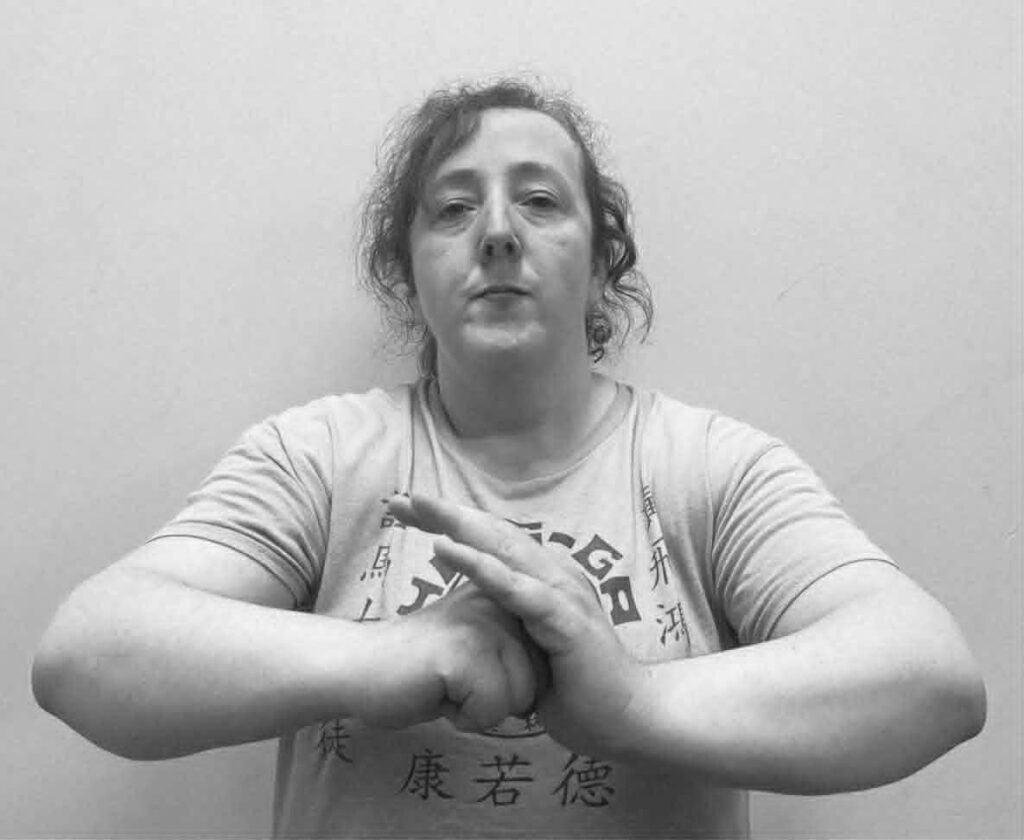
I was immediately obsessed and only started to learn more about the Kung Fu foundations within it once joining the school. I decided to become more deeply involved in the Kung Fu side of things after my first few sessions sensing how beneficial this would be for my physical and mental health and was immediately welcomed by fantastic people and a warm and friendly environment
Which classes do you like best and how often do you attend?
I attend 3 times a week when I can, and my favourite classes are lion dance (of course) and weapons applications on Wednesdays.
What motivates you to keep coming back?
The need to improve and challenge myself, as well as devote myself to something important outside of home and work. I also have a very loud and anxious mind so regular Kung Fu and lion dance training has proven fantastic for me and changed my life for the better. I have previously had some bad experiences with martial arts classes and teachers before which had put me off trying again for several years, but the warmth and knowledge/expertise of Sifu and everyone in the school keeps me coming back. I owe everyone who has supported me and pushed me to keep going.
What’s your favourite aspect of Kung Fu so far?
The commitment and discipline it has instilled in me, and the satisfaction of seeing and feeling tangible results physically and mentally.
Age: Under 20 | 20s | 30s | 40s | 50s | 60s
Occupation: n/a
Started: October 2023
Why did you take up Kung Fu?
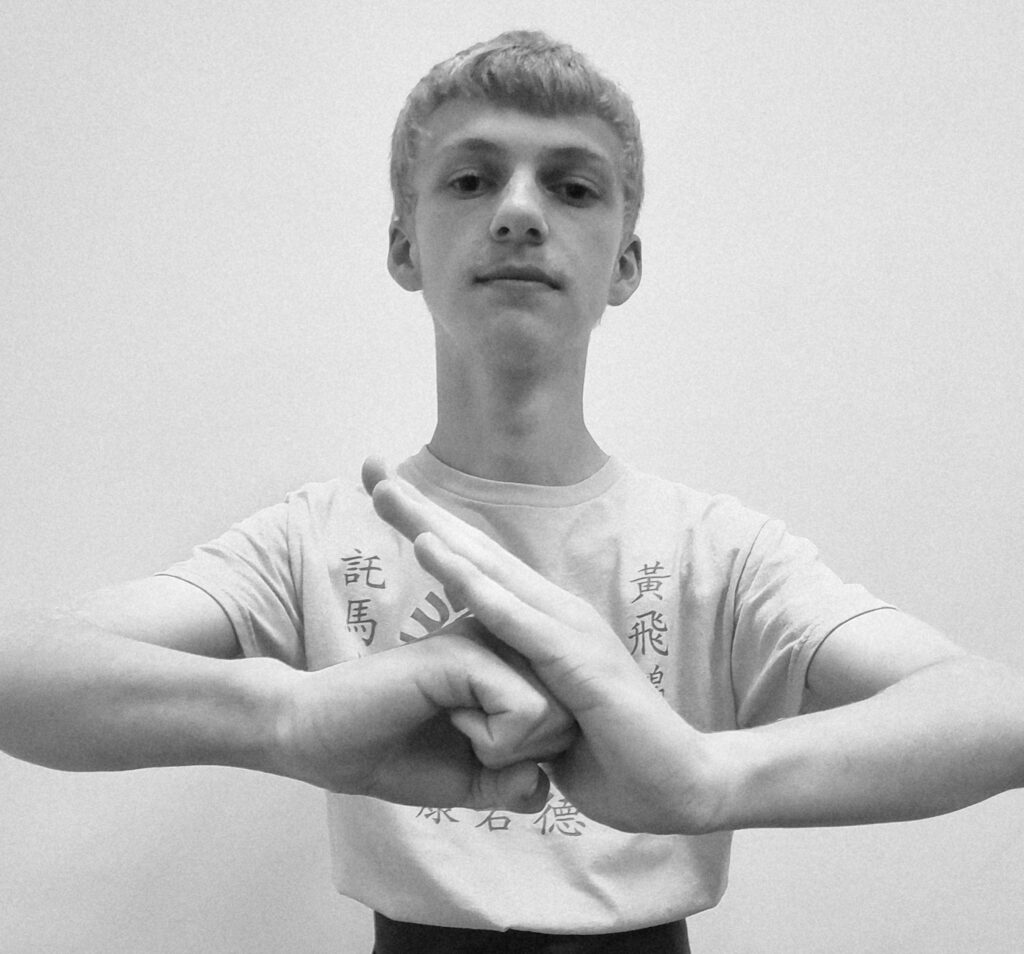
I took up Kung Fu because one of my friends was joining and at that time I wanted to join martial arts too so I decided to sign up. Since then I’ve really enjoyed the discipline, fitness and traditional side of Kung Fu and it has become a big interest of mine
Which classes do you like best and how often do you attend?
I attend the Saturday and Monday classes. The Saturday class is a mixture of applications, partner work, sparring, forms (which is a long sequence of moves performed in a set pattern. designed to help you remember techniques, coordination, balance and power.) We do form almost every Saturday, and applications, partner work, sparring, etc. change every couple of weeks or so. And Monday class is focused on form. (Including warmups at the start of both classes mentioned) but form is the primary focus of Monday class. So if you ask me which class I like the best I’d say I enjoy Saturday a bit more overall and I attend every week I can.
What motivates you to keep coming back?
I’m motivated to come back because I’ve taken an interest into Kung Fu itself, the discipline, progress and the community is really good. I’ve made multiple friends over the last couple years and everyone new I meet is an amazing person and inspiration to come back.
What’s your favourite aspect of Kung Fu so far?
I’d say my favourite aspect of Kung Fu is seeing progress in training, sparring, knowledge and the people. When I notice progress or have a good sparring session I feel great. I also really enjoy taking part in parades with dragon dancing and performing forms. It’s great to be part of such an amazing community that’s given me a chance to develop myself as a person, to have discipline, to be active and increase my overall strength and flexibility.
Age: Under 20 | 20s | 30s | 40s | 50s | 60s
Occupation: Small Business Owner
Started: June 2025
Why did you take up Kung Fu?
Initially, out of curiosity! While waiting weeks to get my motorbike fixed, I watched a lot of Jesse Enkamp’s videos on YouTube and was struck by how considered and articulate the Sifus and Senseis were when talking about their disciplines.
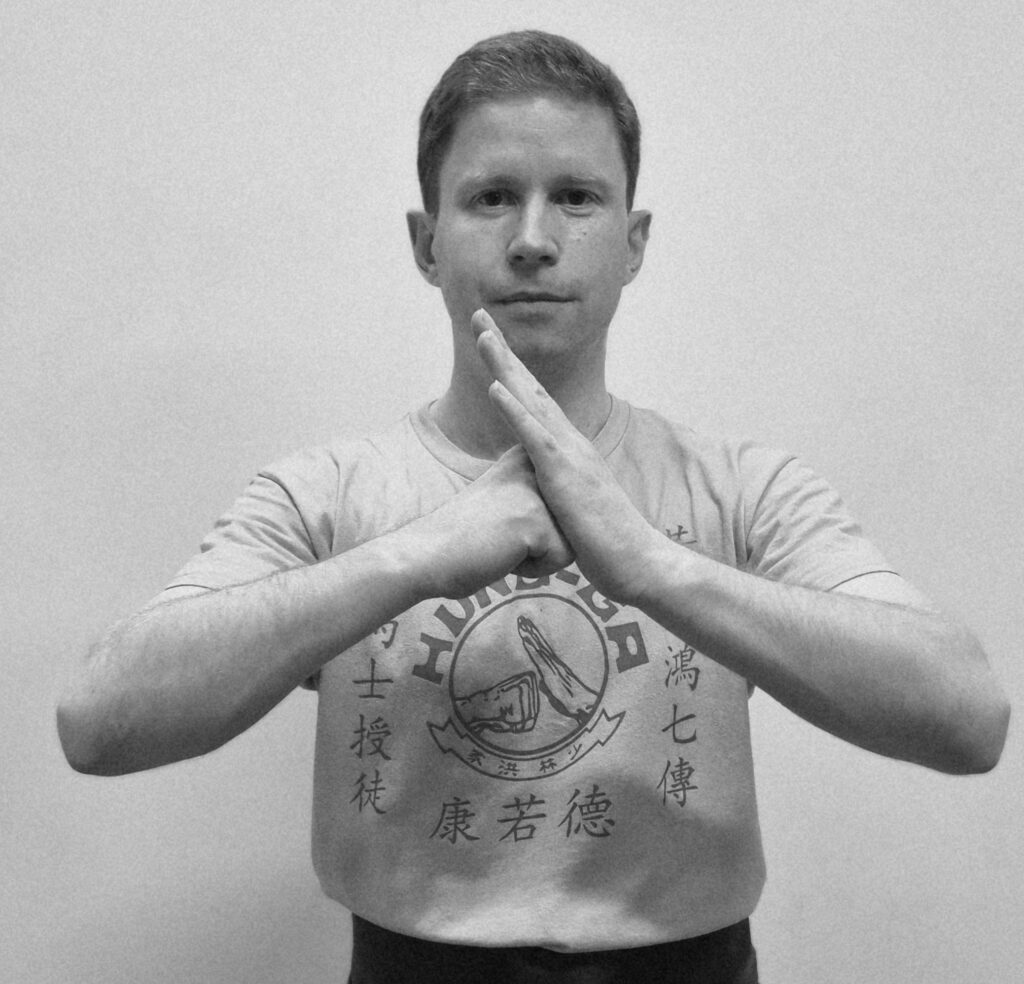
I hadn’t realised how thoughtful and reflective a martial art could be. My interest piqued, I Googled to see what was available in Edinburgh and chose Yee’s because they seemed to have so much going on, with an emphasis on health, community and family spirit. I went along to the first free taster class and was hooked straight away!
Which classes do you like best and how often do you attend?
I tend to go twice a week – every Monday and alternating Wednesdays and Fridays. That keeps me learning new form while also getting fitter and gradually improving my understanding. It’s all really good fun, but I think I like Fridays the best – learning how to put theory into practice in a safe way.
What motivates you to keep coming back?
Lots of reasons – the first of which is that it’s really fun. It’s impossible to worry about work or other stresses when you’re in the kung fu zone, learning new stuff. If you practice, there’s also a steady feeling of progress and improvement. Each time I go, I learn how to make something very slightly better – and all those incremental improvements start to build up. I also really like that everyone is really friendly and willing to help you improve.
What’s your favourite aspect of Kung Fu so far?
I love that it’s so broad. It allows you to expend a lot of energy very quickly (which is great for fitness), but it also encourages (demands?) self-reflection – precision is important, and that’s hard to achieve unless you’re constantly thinking about what’s going on biomechanically. I’m quite an analytical person, so I enjoy puzzling out why a particular move feels wrong and then trying to fix it before I ask for help.
Age: Under 20 | 20s | 30s | 40s | 50s | 60s
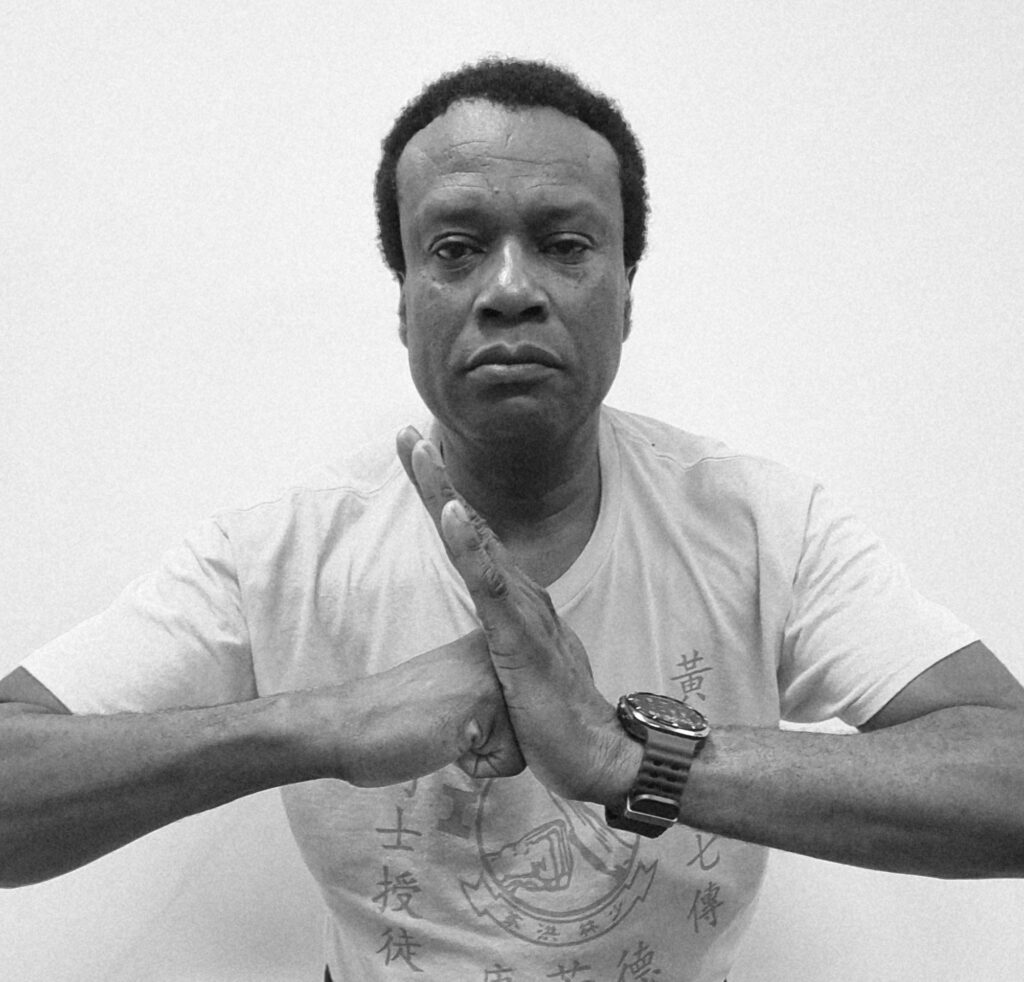
Occupation: Registered Nurse @ Royal Infirmary of Edinburgh (Acute Medical Unit)
Started: September 2025
Why did you take up Kung Fu?
I took up Kung Fu because it helps enhance my well-being holistically, physically, emotionally, and mentally. Also, it has become my lifestyle.
Which classes do you like best and how often do you attend?
I like all the classes; however, for now, the Monday classes are preliminary. Moreover, due to hospital work schedules, I attend twice a month and 3 times a month when on my annual leave.
What motivates you to keep coming back?
Kung Fu is my lifestyle. I started martial arts when I was 19 years old. Furthermore, the forms, the fun and camaraderie motivate me. Sifu is legendary, too.
What’s your favourite aspect of Kung Fu so far?
My favourite aspect of Kung Fu is its philosophy of self-cultivation. Rather than teaching me how to fight, it’s an art of living. It blends physical conditioning with mental discipline, teaching that true mastery needs patience, respect and constant self-improvement.
Age: Under 20 | 20s | 30s | 40s | 50s | 60s
Occupation: University Student
Started: September 2025
Why did you take up Kung Fu?
Ever since I was young, I’ve always wanted to learn martial arts. My dad would often practice moves, stretches and exercises from his own martial arts training, and my cousin did Tae Kwon Do, so I grew up surrounded by it. I also watched Jackie Chan and Chuck Norris films with my dad, which gave me a real appreciation for martial arts from an early age.
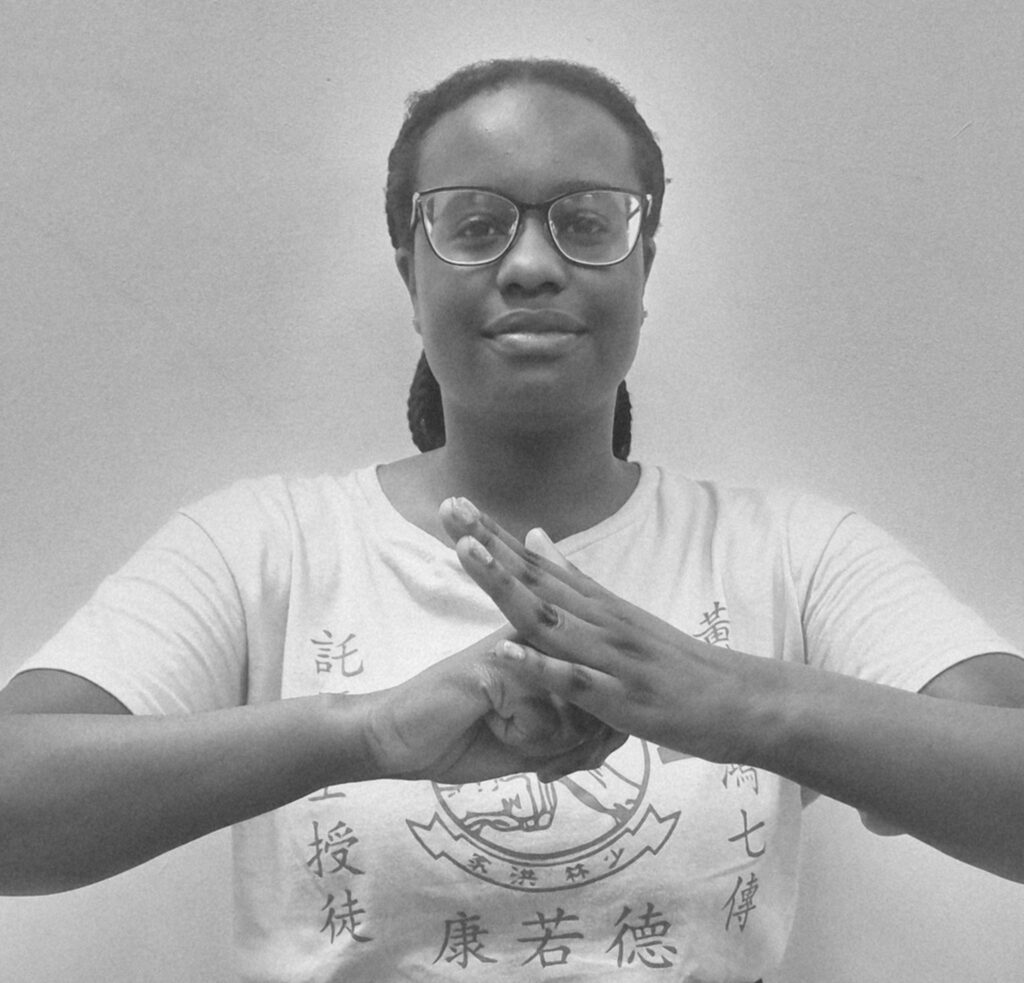
After watching the Netflix show ‘Adolescence’ and reading news stories about violence against women, I encouraged my dad to help my sister and I find a place to learn martial arts so we could protect ourselves. That’s when he found Yee’s Hung Ga Kung Fu, and from our very first class, we knew we wanted to keep coming back every week.
Which classes do you like best and how often do you attend?
So far, I only attend the Monday class, which I go to every week unless I’m ill or something unexpected prevents me from attending. In this class, we learn sequences of moves that build into a ‘form,’ with each technique explained in terms of how it can be applied in real fighting situations. I enjoy this class because it teaches me practical ways to defend myself, which was my main reason for taking up Kung Fu in the first place.
What motivates you to keep coming back?
What motivates me to keep coming back is that it gives my dad, sister, and I a chance to spend time together while learning something new. The people there are welcoming, encouraging, and easy to talk to, which makes the environment enjoyable. I also like that it’s a group activity because even when my family can’t attend, I still feel part of a community while being able to focus on improving independently.
Also, training each week gives me a sense of routine and progress. Although it can be challenging, it’s rewarding and has helped build my confidence, especially knowing that the techniques I’m learning can be applied in real situations if needed.
What’s your favourite aspect of Kung Fu so far?
I love learning new forms and performing the full sequences, especially as a group. It’s exciting to see my body move in ways I never thought it could, and I enjoy challenging myself to improve each week. I also find Kung Fu very stress-relieving, particularly when the movements are combined with controlled breathing and full effort as it feels like I’m releasing tension with every session. Over time, I’ve noticed my strength and resilience growing, which motivates me to keep pushing myself and continue learning.
Age: Under 20 | 20s | 30s | 40s | 50s | 60s
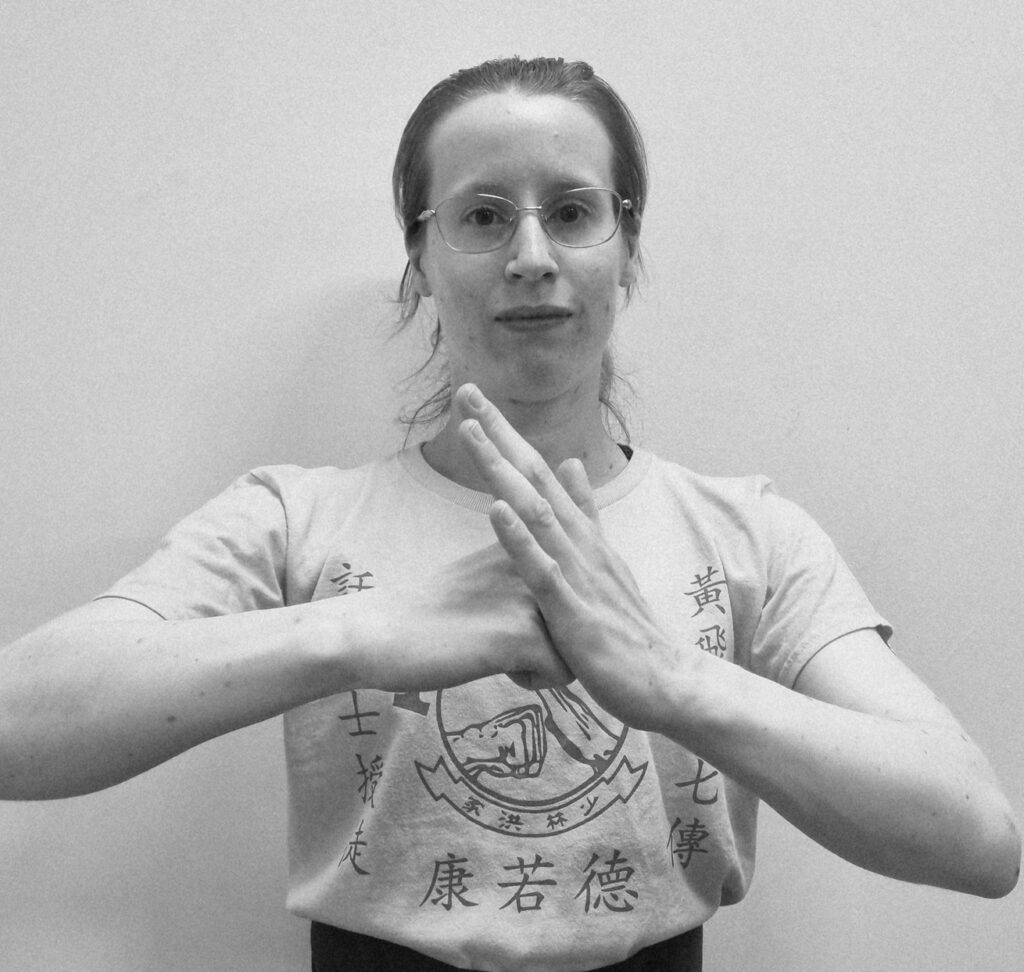
Occupation: Specialist radiation advisor
Started: 2026
Why did you take up Kung Fu?
I’ve always loved martial arts and have done various martial arts throughout my life, starting from when I was a child, so when I moved to Edinburgh I was looking for martial arts classes to join and thought it would be fun to try something new. I saw some videos of kung fu on social media, and it seemed like the perfect martial art for me to try.
Which classes do you like best and how often do you attend?
Such a hard question, I love all the 7pm classes! But if I had to pick one, it would probably be the Friday class. I love that what we do during these classes changes every week, and regardless of what we are doing I always get so much out of the class. Usually I go to two classes a week.
What motivates you to keep coming back?
Some of the main things that motivate me to keep coming back are that it’s great fun, everyone here is so friendly and welcoming, and because of the improvements in seeing in my fitness, mental resilience and self-defence skills.
What’s your favourite aspect of Kung Fu so far?
I love how complete Kung Fu training is. In all the other martial arts I have tried, the focus was only on the movements, but Kung Fu teaches the mindset and breathing as well as the moves. For example, the mindset that Kung Fu trains has really helped me improve my strength because I’ve learned not to give up when my muscles get tired, as I would have done in other martial arts, but instead keep going that little bit longer until my muscles actually can’t hold the position any longer. It turns out all this time that it was my mind holding my body back from reaching its full potential, not my body’s physical limitations!